
Far too many people are struggling to afford their utility bills, so it’s important to know the process for applying for the Low-Income Home Energy Assistance Program (LIHEAP).
According to the Illinois Department of Commerce and Economic Opportunity (DCEO), the LIHEAP application period is Oct. 1, 2026 to Aug. 13. 2027, or until funding is exhausted.
- Beginning Oct. 1, these eligible households can apply: older adults (age 60 and older); individuals with a disability; households with at least one child age 5 years and under; and households that are disconnected from their utility, have a disconnect date within 7 days, or have less than 25 percent remaining in their propane tank.
- On Nov. 1, all other eligible households can apply.
Here are the steps to take if you want to apply for funding:
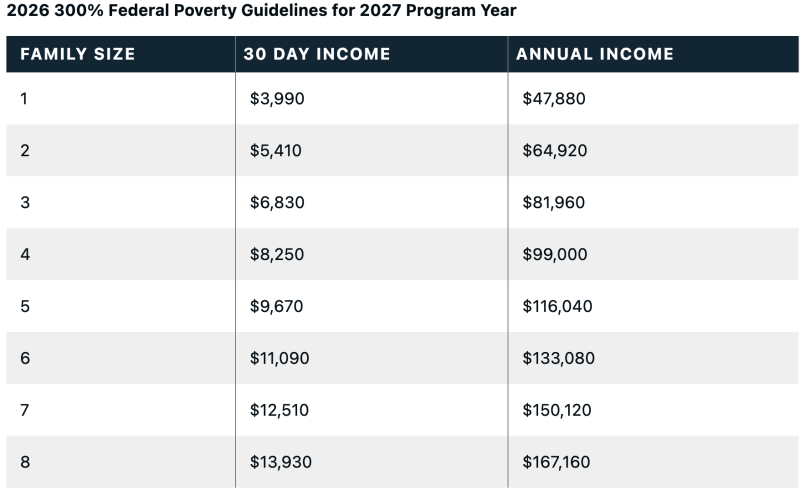
1) Determine if you meet the income-eligibility guidelines. To qualify, your household’s combined gross income for the 30 days before applying must be at or below 300 percent of the Federal Poverty Guidelines. (If you’re a customer of a federally funded utility, the limit is instead 60 percent of the state median income.) The graphic below outlines the income guidelines:
2) Once you have determined you meet the income requirements, prepare the documents you’ll need to apply. According to the Illinois Department of Commerce & Economic Opportunity, you’ll need:
-
- Proof of past 30-day income through a paystub, check or copy of a check showing your fixed income amount (e.g. SSA, VA, DHS benefits), or other proof of documentation for any income source.
- Copy of your most recent bill for heating (usually gas, propane or electric) and/or the electric bill issued within the last 30 days (if energy is directly paid for).
- Social security card or ITIN for residents who have them. (Note: Residents without ITIN or SSN can still apply and your “local administering agency/community action agency” will advise accordingly. See below for more info about finding your local agency.)
- A copy of your rental agreement (if renting) showing that the heating utility or utilities is/are included, the monthly rental amount, and landlord contact information.
- Proof that the household received TANF, Medicaid, SNAP, or other benefits if applicable.
3) Next, find a local community action agency based on your county of residence. This is where potential applicants will go to start the intake process.
4) Once your community action agency is located, the agency will work with you to complete an application. You can check the status of your application after applying, and you should be notified of your approval or denial within 30 days of applying. Payment is then made to the utility company on behalf of the resident.
If you have additional questions, please visit the DCEO FAQ page or call the LIHEAP hotline, 1-833-711-0374. Also, watch this tutorial video from CEDA: How to Apply for Gas and Electric Bill Assistance.
